Emotional Maturity Before Marriage: How to Recognise It
Emotional maturity is not calmness or age. It is the ability to own your feelings, take responsibility, and stay respectful when a marriage is hard rather than easy.
When people picture a good marriage they usually imagine compatibility, attraction or shared goals. What quietly determines whether a marriage survives its hard seasons is something less visible: emotional maturity. It is the difference between two people who can weather conflict and repair it, and two people who wound each other every time life becomes difficult.
Emotional maturity is often confused with being calm, being older, or being religiously knowledgeable. It is none of those on its own. A person can be devout and still explode with rage; another can seem serene until they are contradicted. This guide is about what emotional maturity actually is, how to recognise it in a potential spouse, and — just as importantly — how to grow it in yourself.
Emotional maturity is the ability to notice your own feelings, take responsibility for your behaviour, and stay respectful under stress. It shows up as self-awareness, accountability without blame-shifting, the capacity to regulate anger, and the willingness to repair after conflict. It is not the absence of strong emotion, and it matters far more to a lasting marriage than age, charm or a shared checklist.
Maturity is not calmness, age or piety
Separate emotional maturity from the things that are commonly mistaken for it.
A quiet manner can hide an inability to handle conflict; a person may simply withdraw or suppress until they erupt. Age guarantees nothing, since some people repeat the same emotional patterns for decades. And religious knowledge, while valuable, does not automatically translate into self-control or gentleness at home.
Real maturity is about how a person handles their inner life and their treatment of others when things go wrong. It is measured in behaviour under pressure, not in a serene surface, a birth year, or fluent religious speech.
Self-awareness: knowing what you feel and why
A mature person can name their emotions instead of being controlled by them.
Self-awareness is the foundation. It means being able to notice “I am anxious,” “I am jealous,” or “I feel disrespected,” and to trace the feeling to its source rather than immediately acting on it. People without this awareness tend to experience their emotions as facts about the other person: “I feel ignored” becomes “you are ignoring me on purpose.”
The reflective habit — pausing, and even writing things down — is one of the clearest markers of maturity. Someone who can describe their own patterns, weaknesses and triggers honestly is far safer to marry than someone who insists they are simply always right.
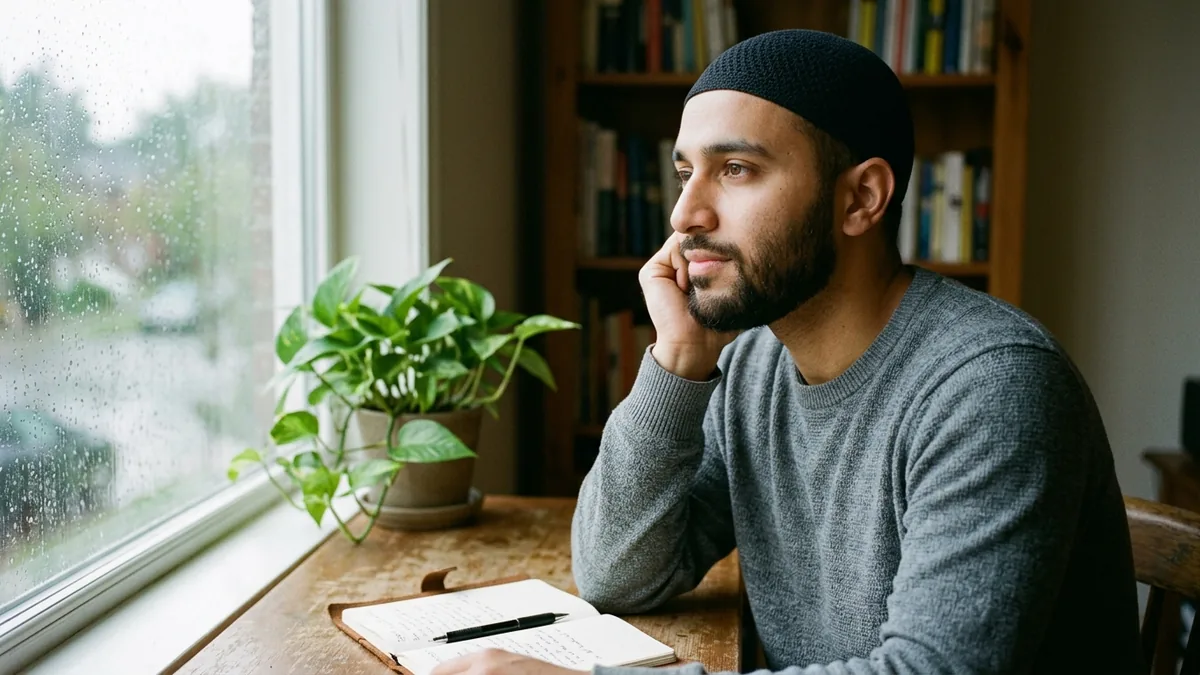
Before every serious step, Sami kept a small notebook where he wrote down what unsettled him and why. It was not dramatic, but it meant that when his fiancée raised a concern, he could recognise his own defensiveness instead of firing back. That single habit changed the temperature of every difficult conversation they had.
Accountability without blame-shifting
Maturity is the willingness to own your part instead of always making the other person the problem.
One of the strongest signs of maturity is a real apology — not “I’m sorry you feel that way,” but “I was wrong, and here is what I will do differently.” Immature people experience an apology as a defeat, so they deflect, minimise, or counter-attack with a list of the other person’s faults.
Watch, before marriage, how a person handles being wrong about something small. If they cannot concede a minor point graciously, they will not concede a major one under real pressure. Accountability is a habit long before it is tested by a crisis.
Regulating anger instead of being ruled by it
Everyone feels anger; maturity is what a person does with it in the moment.
Anger itself is not a defect. The question is whether a person can feel it without becoming cruel, controlling or frightening. A mature adult can be angry and still not insult, threaten, slam or punish. They can step back, cool down, and return to the issue — a practice the deen itself encourages when it counsels seeking calm rather than acting in a rage.
Someone who cannot regulate anger will make a home feel unsafe no matter how good the good days are. Contempt, humiliation and rage are not personality quirks to be tolerated; they are patterns that tend to worsen inside marriage, not soften.
The ability to repair after conflict
Mature couples are not those who never argue, but those who reconnect well afterward.
Every marriage has conflict. What separates the stable ones is the capacity to repair — to come back after a disagreement, acknowledge the hurt, and restore warmth rather than nursing a grudge or punishing with silence. Repair is a skill, and you can often see its early form in how a person handles a small rupture before marriage.
Notice whether a candidate can move from “I won” to “we’re okay again.” A person who treats every disagreement as a battle to be won will slowly exhaust a marriage; one who values the relationship above being right will protect it.
Growing your own maturity
Emotional maturity is not fixed; it can be developed with honesty and, where needed, help.
- Practise naming your feelings before reacting, and notice your recurring triggers.
- Learn to give a complete apology without excuses or counter-accusations.
- Build a habit of stepping away from anger and returning to the issue calmly.
- Invite honest feedback from people who know you, and take it without defensiveness.
- Seek a counsellor if past wounds or patterns keep controlling your reactions.
A practical example
Rania met two men within a year. The first was charming and generous but treated any disagreement as an attack, apologising only by listing what she had done wrong. The second could sit with a hard conversation, admit his own faults, and return warmly after friction without keeping score.
On paper the first looked more impressive. In practice the second was offering the thing that actually keeps a marriage safe: the ability to be wrong, to calm down, and to repair. Rania learned to weigh emotional maturity as heavily as any other criterion — because it is the quality that decides how every other difference will be handled.
Frequently asked questions
Does emotional maturity come with age?
Not reliably. Some people mature through honest reflection and effort; others repeat the same patterns for years. Look at how a person actually handles conflict, apology and anger, not at their age.
Can a religious person still be emotionally immature?
Yes. Devotion and self-control are related but not the same. A person can hold real religious knowledge and still struggle to regulate anger or admit fault. Character in ordinary life is the truer measure.
Can emotional maturity be developed before marriage?
It can. Self-awareness, honest apology, anger regulation and openness to feedback are all skills that grow with practice, and a counsellor can help where old wounds keep controlling your reactions.
What is the clearest sign of immaturity to watch for?
A consistent inability to take responsibility — deflecting blame, refusing to apologise sincerely, and treating every disagreement as a fight to win. Contempt and uncontrolled anger are serious warning signs.
Sources and scope
- Qur’an 30:21 describes love and mercy (mawaddah wa rahmah) as the intended basis of marriage, which emotional maturity helps to protect.
- Reports encouraging a person to seek calm rather than act in anger are widely narrated. Persistent difficulty with anger, self-worth or past trauma may warrant support from a qualified counsellor.
Weigh maturity as heavily as any other quality
Compatibility, attraction and shared goals all matter, but emotional maturity is the quality that decides how every other difference between you will actually be handled. A mature partner makes a hard marriage workable; an immature one can make even an easy match painful. It is worth assessing honestly — in them and in yourself — before the commitment is made.
This kind of assessment sits naturally alongside learning to evaluate character beyond a first impression and knowing which traits are true dealbreakers rather than preferences. Where strong emotion tips into control, the guide to the line between care and control can help you name what you are seeing.