Somali women singing buraanbur with a drum at a wedding celebration.
The Somali Wedding: The Meher, the Shash Saar and the Buraanbur
Sixty people watched him sit on the floor with the knot in his hands for twenty minutes, and every one of them was enjoying it.
Sixty people watched Abdirahman sit cross-legged on the floor with the knot in his hands, and every one of them was enjoying it.
The container in his lap was the xeedho: a decorated vessel packed with muqmad — dried meat pressed in ghee and spices — prepared by his wife's family and bound in a cloth tied deliberately, expertly, cruelly. He was not allowed to cut it. He was allowed to be laughed at, and the women of her family were composing verses about his hands while he worked.
It took him twenty minutes, which is respectable. His brother-in-law had reportedly taken an hour. And when it finally opened, the room made the noise that a room makes when a small piece of theatre has gone exactly the way everybody hoped.
The two things people still discuss years later
Ask about a Somali wedding a decade afterwards and two subjects come up: whether the poetry was any good, and whether the meher was fair. The hall, the dress and the food are forgotten far sooner, and that tells you exactly where the weight of this tradition sits.
Everything else in the week — the henna, the aroos, the scarf, the knot — arranges itself around those two things: what was said, and what was promised.
The families ask first
A Somali marriage is understood as a link between two families, and the enquiries that precede it are taken seriously: who the family is, how they are known, how they treat people who cannot do anything for them. Elders are involved from the beginning and their approval carries real weight.
None of that removes the couple's own decision. Consent is the woman's right, and a marriage pushed through over her objection is not the tradition working — it is the tradition being misused, and elders worth the name will say so themselves. Families who ask her directly, and then give her the time to answer without an audience, are following both the religion and the better version of the custom.
The meher, written and actually paid
The meher is agreed between the families and written into the contract. It belongs to the bride, and in Somali practice it is often stated in two parts: what is given now, and what remains owed.
Two honest points about it. A meher set so high that the marriage waits years serves nobody, and the tradition of the Prophet ﷺ was ease rather than display — a family asking for a modest amount is not being cheap, it is being sensible on its daughter's behalf. And a meher that is agreed and never actually paid is a debt, not a formality. Writing it down and paying it is the entire difference between a right and a story people tell.
This is the part of the wedding that follows the couple afterwards. Everything else ends when the guests go home.
The nikah, and the country you live in
The contract is concluded with the guardian involved, two witnesses present and the meher named, usually as a men's gathering at the mosque or at the family home, with dua and a short khutbah, and the bride's consent conveyed properly.
Where the family lives outside Somalia, this is also the moment to do whatever that country requires for a legally recognised marriage. A nikah alone, in most Western countries, gives a wife none of the protections the law provides — and the people who pay for that gap are her and the children, at the exact moment they need a document rather than a memory. It is not a religious compromise to also sign a civil register; it is the modern form of announcing a marriage instead of hiding it.
Henna, and the poetry that is disappearing
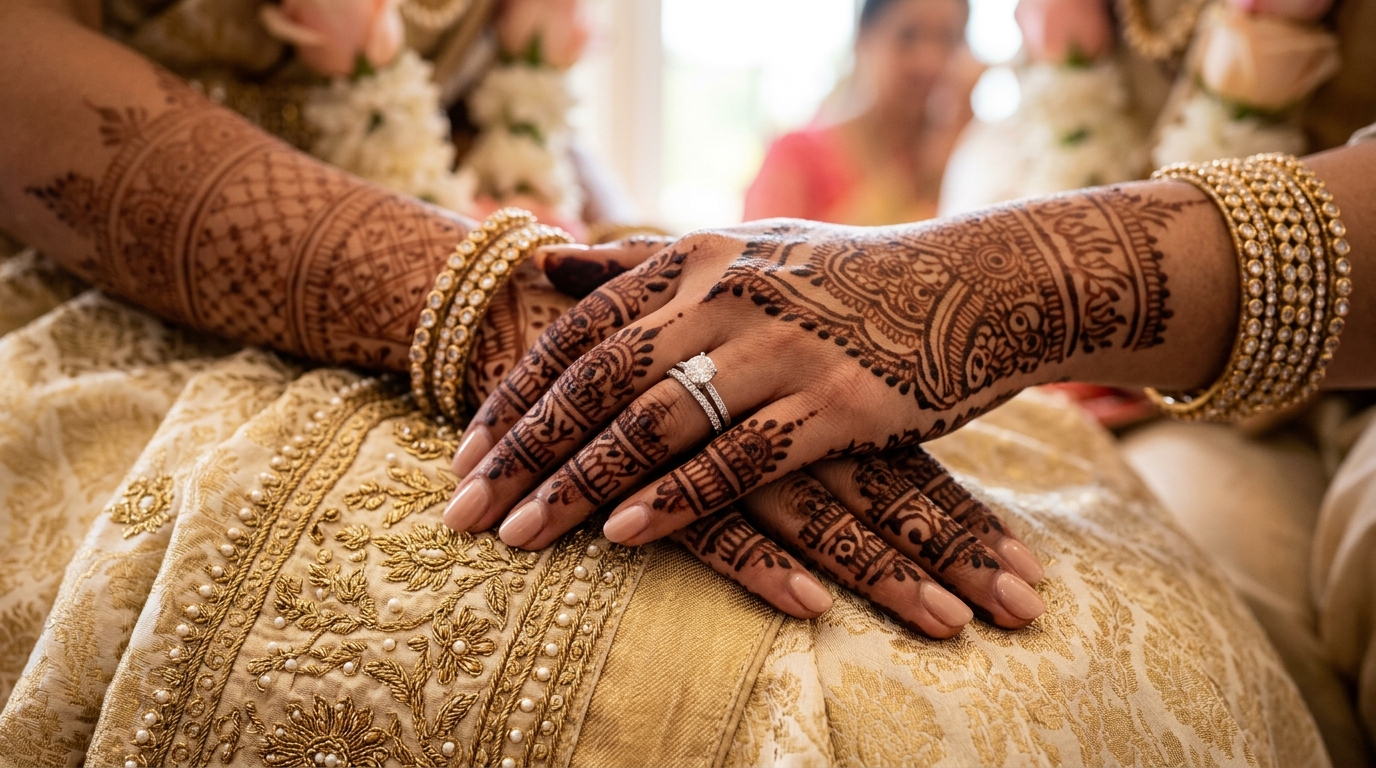
The bride's henna is applied in the fine, dense Somali style across hands and feet, and it takes hours. Around it are the women of both families, food, and singing that continues far longer than anyone planned. The usual caution applies to the paste: test it days beforehand, and avoid anything sold as instant black henna, which may contain PPD and burn the skin.
Then the buraanbur — women's poetry, composed and performed with a drum, and the artistic heart of the whole wedding. It praises the couple and both families, it teases, it advises, and a skilled woman improvising verses about the people actually sitting in the room is the highlight of the night in a way no hired singer ever manages.
This is a real art form with a long history, and it is thinning out in the diaspora as the older women who carry it pass away. If your family still has someone who can compose, record her — on a phone, badly, it does not matter. It costs nothing and it preserves something that cannot be bought back once it is gone.
The aroos, and the phones
The aroos is the celebration itself: a hall, a long night, the bride entering to singing, dancing and an enormous quantity of food. It runs later than any schedule survives, and the women's side is the centre of it.
Because that hall is a women's space where guests are unveiled, filming is a genuine concern rather than a fussy one. Decide it in advance rather than on the night: say it on the invitation, appoint two relatives whose only job is to watch the room, and if photographs are wanted, hire a woman photographer with a written agreement about where the images are stored and who may see them. One phone in one hand is all it takes.
The shash saar
The shash saar is the ceremony in which the scarf is placed on the bride by the married women of the family, marking her passage into married life. It is often held on a separate day with its own gathering, singing and gifts.
It is one of the warmest customs in the region, and the reason is who performs it. The women putting the scarf on her head are the women who will be her reference points for the next twenty years — the ones she will phone at eleven at night in her first difficult year. The advice given at that gathering tends to be the practical kind nobody writes down, and it is worth being present for rather than photographed at.
The arithmetic of four countries
The heavy costs are the hall and catering, the dresses, the photographer, the gold, and — for families abroad — the flights. A wedding attended by relatives from four countries is largely a travel budget with a party attached, and the travel is almost never counted until it is too late to change it.
Two habits save families a great deal. Decide the guest number before booking the hall, because the caterer charges per head and a room booked for five hundred will be filled with five hundred. And keep the wedding budget separate from the money for the home — couples who spend the deposit on the night regret it within the year, reliably. Our guide on wedding costs and avoiding debt goes through the numbers.
Somali families are among the most widely spread in the world, and weddings routinely happen with half the relatives on a video call, or with the couple in two countries and the contract concluded through a properly appointed representative. That does not make the marriage less real. It does make documents essential: keep the certificate, the translations and any attestations together, because a couple in this situation will be asked to prove their marriage far more often than most — for residency, for a child's papers, for travel, and sometimes years later for something nobody anticipated.
What to settle before the date is fixed
Most of the strain before a Somali wedding comes from things nobody said out loud, and one honest conversation with the elders of both sides settles nearly all of it.
The meher in full: what is paid now, what remains owed, and written down rather than remembered. Who pays for what, including the hall, the food and the travel. The guest number, decided before the venue. Filming, so the disagreement does not arrive on the night. And where the couple intend to live — which country they will settle in, said plainly, because for families spread across continents that is the question that quietly decides the next ten years.
Then write down what was agreed. Two families remembering one conversation differently is how a happy wedding becomes tense before it has even happened.
Why the knot survived
The xeedho is opened on the seventh day, and underneath the theatre it does something quite deliberate: it keeps the two families together for a week instead of sending everyone home after the party, and it gives the bride's side a last claim on the occasion. In the diaspora the week has shrunk to a day, and yet the xeedho itself has survived almost untouched — which tells you how much people enjoy it, and how little of a tradition is actually lost when the rest of the schedule is cut.
That is the useful lesson in all of this. What the marriage requires is short: the consent of both, a meher, witnesses, the guardian's involvement, and announcement rather than secrecy. The buraanbur, the shash saar, the length of the aroos and the weight of the gold are Somali custom — much of it generous and worth protecting, none of it a condition of being married.
So keep the poetry, and record it while you still can. Keep the shash saar. Keep the knot, because Abdirahman's twenty minutes will be discussed at family gatherings long after the hall is forgotten. And keep the meher honest, because it is the one part of that week the marriage still carries afterwards. To compare with the region, read the Sudanese wedding or the Gulf wedding.
Questions families ask
What is the xeedho?
A decorated container packed with muqmad — dried meat in ghee and spices — prepared by the bride's family and bound with an intricate knot. On the seventh day the groom or a man from his side must open it in front of everyone without cutting it, while the women make it as difficult and as funny as possible.
What is buraanbur?
Women's poetry composed and performed with a drum, praising, teasing and advising the couple and their families. It is the artistic centre of a Somali wedding and is thinning out in the diaspora — record the women in your family who can still compose it.
Is a nikah enough if we live in Europe or North America?
Religiously the nikah is the marriage, but in most Western countries it gives a wife none of the legal protections that come with a registered marriage. Do both, and keep the certificate, translations and attestations together.
How should the meher be set?
At a level that will genuinely be paid. A figure so high that the marriage waits years serves nobody, and a meher agreed but never paid is an outstanding debt rather than a formality. Write down both what is given now and what remains owed.
What happens at the shash saar?
The married women of the family place the scarf on the bride, marking her passage into married life, often at a separate gathering with singing and gifts. The advice exchanged there is usually the most practical of the whole week.