Safe First Meetings for Marriage: Place, People and Practical Boundaries
A first meeting should be calm, public and purposeful. Learn the practical boundaries that make a meeting safe without making it stiff or awkward.
A first meeting for marriage can be either a helpful reality check or an overly intimate scene that was never prepared with enough care. The difference is not just the venue. It is the structure. When people think “safe” means “comfortable” only, they miss the practical details that protect both dignity and judgment. A meeting can feel easy and still be too private, too long or too vague.
The point of a first meeting is not to create romance on the spot. The point is to see whether the conversation can happen with honesty, respect and enough calm to let the essentials surface. If the meeting is arranged properly, both sides leave with clearer information, not just stronger feelings.
A safe first meeting is one that happens in a public or otherwise observable place, with clear expectations about who will attend, how long it will last, what kind of conversation will happen and how each person can leave comfortably if the fit is not right. Safety is practical: it protects dignity, limits pressure and keeps judgment clear.
Choose a place that reduces pressure
Public does not mean cold; it means the setting does some of the work for you.
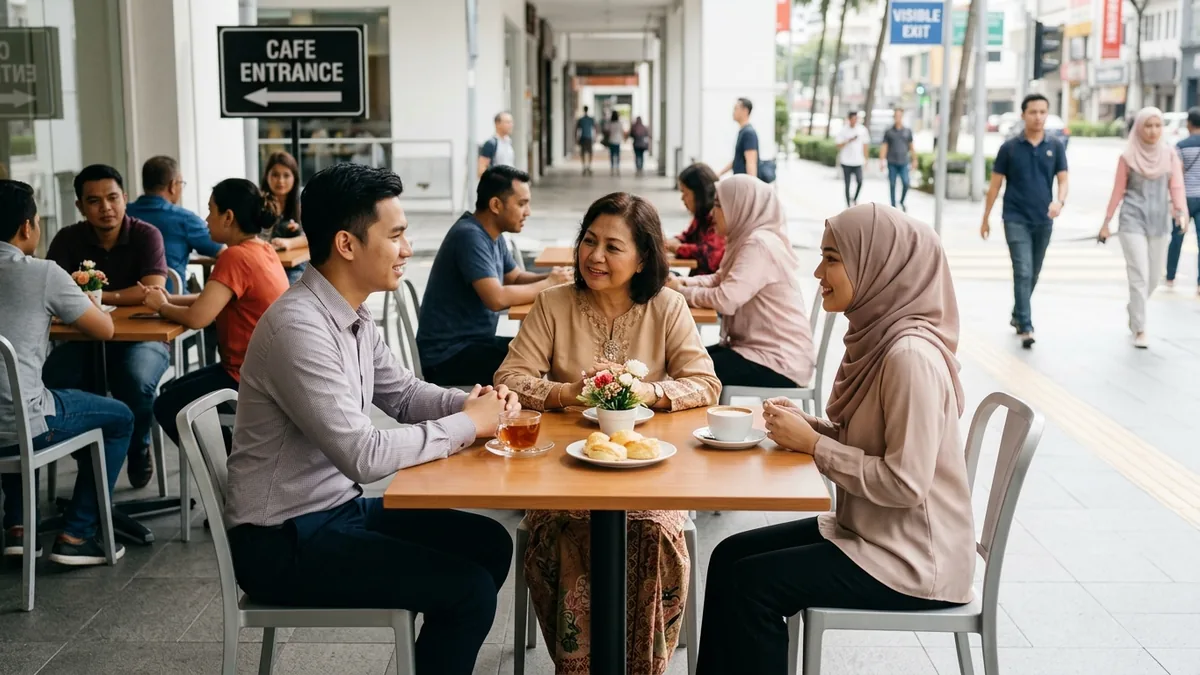
A good first meeting has enough visibility to prevent awkward escalation and enough comfort for real conversation. A café, a hotel lobby, a family living room with others nearby, or a supervised meeting room can all work depending on culture and access. What you want is an environment that feels normal, not secretive.
Avoid settings that push the pair into emotional isolation too quickly: a long evening in a quiet private room, a walk in an empty area, or a situation where everyone feels trapped by politeness. The place should help both people stay themselves rather than perform a mood.
Decide who will be present before anyone arrives
The meeting should not turn into a surprise social puzzle.
Some meetings work best with a trusted chaperone or a family member nearby. Others are better with a brief one-to-one conversation in a visible public space, followed by family involvement later. The important thing is that this is decided beforehand. Ambiguity around who will show up often creates stress before the actual conversation even begins.
If a family member is present, clarify that they are there for support and safety, not to dominate the interaction. If the couple meet directly, make sure the location and timing still allow others to know where they are and to intervene if needed. Safety is not only about misconduct. It is also about reducing confusion.
A cousin waiting nearby, a seating arrangement near other customers or a family member in the same room can be enough to keep the meeting grounded without turning it into an interrogation.
Keep the meeting short enough to stay useful
When the meeting goes on too long, people start performing instead of assessing.
- Set a start time and end time before the meeting begins.
- Choose a few specific topics rather than trying to solve the entire future in one sitting.
- Leave room for later reflection instead of demanding a decision immediately.
- If the conversation is going well, end while the tone is still calm and clear.
Use the meeting to test substance, not chemistry alone
A warm conversation is pleasant, but it does not answer the important questions by itself.
The meeting should help you notice how the other person speaks about family, work, religion, conflict and responsibilities. Does the person answer plainly? Do they listen without trying to dominate? Do they respect pauses and let the conversation breathe? These are much more informative than whether the first ten minutes felt charming.
You are not looking for a performance of compatibility. You are looking for evidence that the conversation can stay honest when the subject turns real. That is exactly why a first meeting needs a safe frame: so you can focus on substance without worrying about the setting pushing you into false intimacy.
Make leaving easy and graceful
A meeting is safer when each person can exit without drama.
Before the meeting begins, each side should know how they will arrive and leave. Independent transport matters. So does a clear reason for ending the meeting if the tone becomes wrong. No one should feel trapped by a ride, a family expectation or a fear of sounding rude.
Graceful exit language helps: “Thank you, this has been helpful” is often enough. A safe first meeting includes the possibility of a polite conclusion. If you cannot leave cleanly, you cannot assess cleanly either.
Review what happened before you move forward
A good meeting ends with reflection, not instant emotional verdicts.
After the meeting, each side should have space to think before any promises are made. Ask what was actually learned: Was the conversation easy to follow? Did either side feel pressured? Did the meeting clarify practical compatibility or reveal problems that should not be ignored?
If the answer is still uncertain, that is not failure. It is data. The purpose of a safe first meeting is to give you a truthful sample of how the process feels in reality. That sample is worth more than a rushed commitment.
A practical example
Rania and Hamza met in a busy café with an aunt present at a nearby table. They had agreed in advance that the meeting would last forty-five minutes, that transport would remain separate and that the purpose was to discuss practical questions rather than to “see if sparks flew.” That clarity changed the atmosphere. Nobody felt trapped, and nobody felt the need to perform.
At the end, both left with the same conclusion: the conversation was promising enough to continue, but not so decisive that a family review was unnecessary. Because the meeting was safe and bounded, it produced real information instead of a haze of excitement. That made the next step easier, not harder.
Frequently asked questions
Is a café the best place for a first meeting?
Not always, but it is often a strong option because it is public, neutral and easy to leave. The best place is the one that gives both people enough privacy for conversation and enough visibility for safety.
Should a chaperone speak during the meeting?
Only if needed. A support person should not dominate unless there is a clear reason. Their job is to protect the frame, not to answer every question for the candidates.
How long should the first meeting last?
Long enough to discuss essentials, short enough to avoid fatigue and emotional drift. In many cases a focused forty-five to ninety minutes is enough.
What if I feel pressure to meet privately?
Treat that as a warning sign. If someone insists on secrecy or isolation at the first meeting, that is exactly when you should slow down and reassert boundaries.
Make the meeting safe enough for clear judgment
A safe first meeting is not about making everything formal. It is about giving both people the freedom to think. If the meeting is structured well, it helps you notice whether the match can move forward with honesty. To keep that process grounded, it often helps to revisit the earlier family-introduction timeline and the practical safeguards in identity verification without intrusion.
If the meeting suggests that the match may have real potential, use that information to continue toward the path from serious interest to nikah. A safe meeting does not force a decision. It simply gives you a cleaner one.